I had read so much before Celine was born. Articles, forums, motherhood advice from friends, all of it well-meaning, all of it slightly different. But nothing quite prepares you for the first months themselves, that strange, tender, overwhelming stretch of time when you’re learning a whole new language with your body, your heart, and a tiny human who can’t tell you what she needs.
Celine was born in mid-August, underweight at 2700 grams. She was fragile, and so was I, in a different way. Looking back now, here’s what actually helped, and what I wish someone had told me sooner.
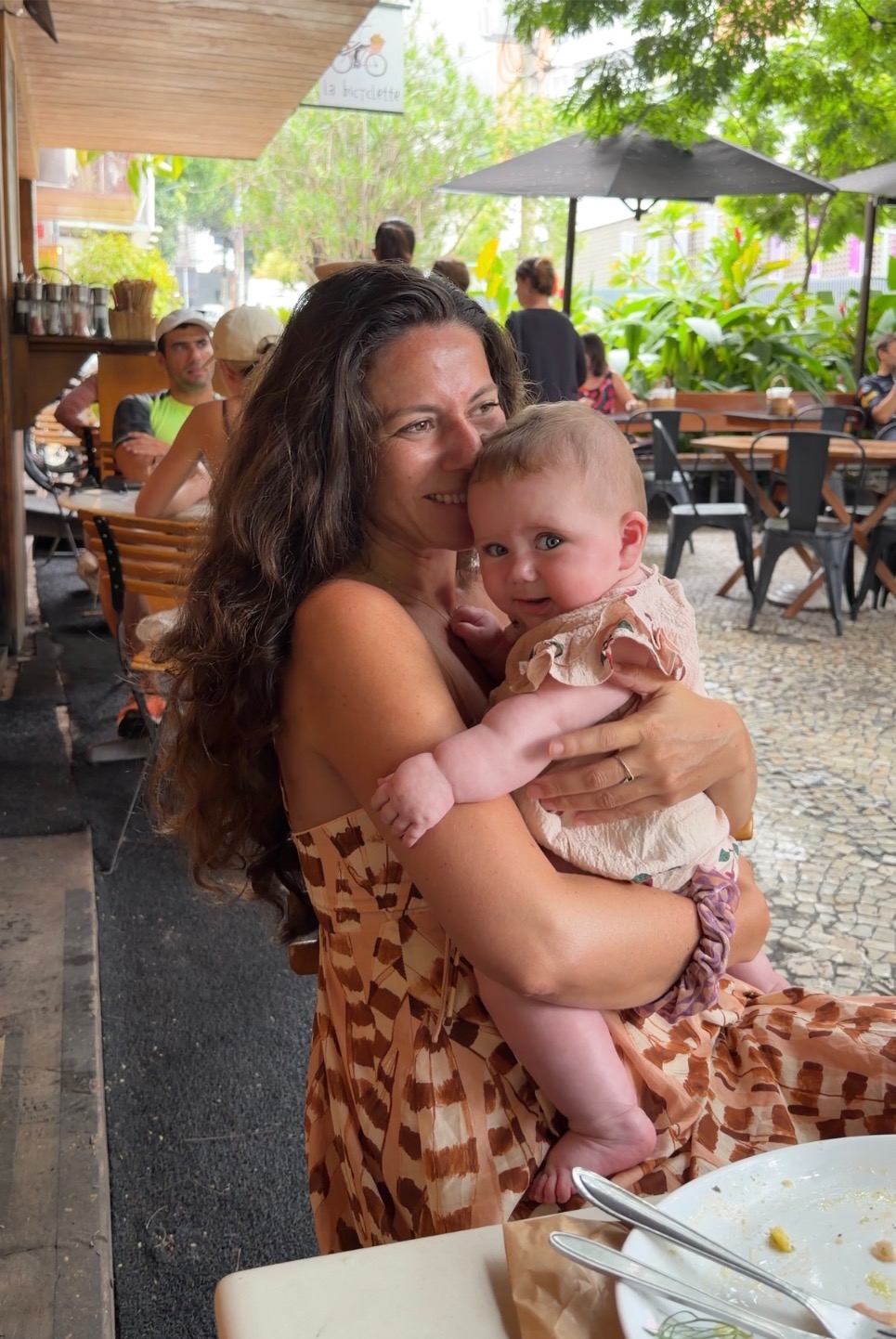
The first days are sacred (protect them)
Everyone wants to meet a newborn. That’s natural, and I understand it even more now than I did before. But those first days are sacred, and they’re short. Celine wasn’t even 24 hours old when my parents came to meet her, and we made the choice that no one would hold her yet, she was too fragile, and so was the moment. When she was two days old, we let others besides ourselves (and nurses) hold her.
For the first week, we only saw grandparents. After that, we let people in slowly, every few days, and always for short visits. Some people understood that instinctively. Many didn’t, so we learned to say it out loud: this is a short visit, and that’s not a reflection on how much we want you here. It’s wonderful to have visitors, but it costs energy, energy that needs to go toward the baby, and toward your own recovery.
Visitors: slow down, you’re not obligated
We also set a rule for bigger gatherings, like when aunts and uncles came as a group: no passing the baby around. We tried it once, person after person waiting their turn for a hold and a photo, and Celine cried before it was even halfway through. We learned from that. After, she only met a few people at a time, not a receiving line. Some relatives were disappointed they didn’t get their turn, and honestly, I stopped caring about that. When it’s your turn, it’s your turn.
My advice: don’t feel obligated to anyone’s timeline but your baby’s. If someone is pushing to visit, they’ve probably missed what this season actually is. Gently explain it, or simply move them further down the list.
Let food be one less decision
Nobody tells you how much mental space “what’s for dinner” takes up when you’re running on no sleep. I ordered a batch of postpartum meals from a nutritionist who delivered everything herself, food built around the right vitamins, fats, and minerals for recovery, not just convenience. Nourisher meals made a genuinely big difference, and I’d recommend the investment to anyone who can manage it.
If people ask what they can bring, ask for food. A lasagna, specifically, is perfect. It gives you food for days and reheats easily. You’ll be so relieved not to think about cooking, while still eating something that actually nourishes you. You don’t want a sandwich, and you don’t want a pizza either. You want to recover well.
Feeding doesn’t have to be All-or-nothing
I used to think breastfeeding was: you either did it, or you didn’t. I didn’t know hybrid feeding existed until I needed it myself. Because Celine was underweight, and my milk supply wasn’t enough on its own, we combined breastfeeding with bottle feeding for months. It wasn’t full-time breast milk, and that was the right call for us, both for her growth and for my own mental load.
By four months, I’d scaled to just morning and evening feeds, partly because we were traveling and I didn’t want the pressure of pumping or feeding on a schedule the whole trip. By six months, I’d stopped entirely. It was, honestly, a love-and-hate journey. There were moments I cried from the pain of it, and yes, it can hurt, despite what people say. I think every new mother feels some version of that, because no one is born knowing how to do this. If you’re struggling, find a lactation consultant early. Don’t wait it out hoping it resolves on its own; they can actually see what’s happening and adjust it.
Sleep deprivation is real (and “Sleep When the Baby Sleeps” is a myth)
Talk to your partner early about who wakes up when, based on how your bodies actually work, not how you think it should be split evenly. I’m a deep sleeper, and once I’m woken in the middle of the night, falling back asleep is almost impossible. So waking at midnight to give a bottle / breastfeeding was wrecking me, while waking at 4am was completely fine. Figure out your own version of that and divide the night accordingly.
“Sleep when the baby sleeps” never worked for me, and I think it’s one of the most repeated and least useful pieces of advice out there. It sounds simple, but it’s almost impossible in real life, there are so many things going on in your mind that you want to use that window to just clear your head, not necessarily sleep.
Ask for help, even in small ways. One time, a colleague offered to watch Celine for a few hours so I could take care of myself. I had a long shower, did laundry, organized the house, while she sang songs to Celine in the next room. I still think about that gesture. It meant so much more than the few hours it took.
Matrescence: The phase no one talks about
There’s a name for what you go through becoming a mother, and almost no one mentions it: matrescence. It’s a real developmental phase, the same way adolescence and menopause are, and it deserves to be talked about just as openly.
Right after birth, your body doesn’t just stop, it gets the signal that you’re no longer pregnant, and your hormones drop sharply. That drop can create something like depression, or a long version of PMS, where you cry without knowing why, or go through periods where joy just isn’t accessible. Know that this is temporary, and that it’s not something you can fight your way out of. It needs to be handled with compassion, not resistance.
Explain matrescence to your partner if you can. The honest truth is there’s often nothing concrete for them to fix. The only thing they can really do is understand, hold you, and tell you it’s going to be okay.
Talk to each other, Even when it’s hard
It sounds obvious, but staying in real communication with your partner is crucial, and it’s the first thing to slip when you’re both exhausted. Your partner needs to understand that your brain is genuinely wired differently right now. Research suggests that clutter and noise can raise cortisol levels in mothers who’ve just given birth, more than it would otherwise. This isn’t you being oversensitive. It’s biology.
To avoid unnecessary tension, your partner doing more around the house isn’t a favor, it’s a necessity. You’re recovering physically, possibly breastfeeding, and spending far more hours with the baby. Even in a relationship that’s normally balanced fifty-fifty, this phase isn’t going to be balanced, and that’s okay. You carried the baby for nine months, gave birth, and are now moving through a mental transition that doesn’t end the moment the baby arrives. Things don’t just snap back to how they were before, and expecting them to only adds pressure neither of you needs.
Motherhood advice: Less is more
There’s an overwhelming amount of information out there about the first months, exercises, activities, what you’re doing wrong, what you’re doing right. Pick a few sources you genuinely trust, ones that feel soft rather than prescriptive, or just one good book, and let that be enough. You don’t need to read everything.
Beyond that, trust your instincts. And if you have a question, just ask it. There’s no prize for figuring it all out alone.
Your mind matters too
Postpartum isn’t only physical, and it doesn’t only show up in the first weeks, sometimes it surfaces a year or two later. I wasn’t struggling mentally myself, so I never went through a program myself, but I do want to mention Mom and Mind here for anyone who is. It’s run by my best friend, Dorien Yassa, a psychologist who works specifically with new mothers navigating their mental health and emotions through motherhood. I’ve seen her work up close for years, and if you’re struggling, even quietly, it’s worth looking into.
So much of motherhood quietly asks you to disappear into it, to put the family first and yourself last, generation after generation. But that comes at a cost. Part of surviving those first months well is remembering you’re allowed to still exist as a person, not just as a mother.